Electricity can kill in an instant.
- Don’t put your life on the line – always look up and live when you are working near powerlines.
- Trees and branches can conduct electricity and cause electric shock or death.
- Tradespeople, vegetation workers and arborists need to take special care when working near overhead powerlines because a simple mistake or a shortcut can be fatal.
- Follow these simple steps to help stay safe.
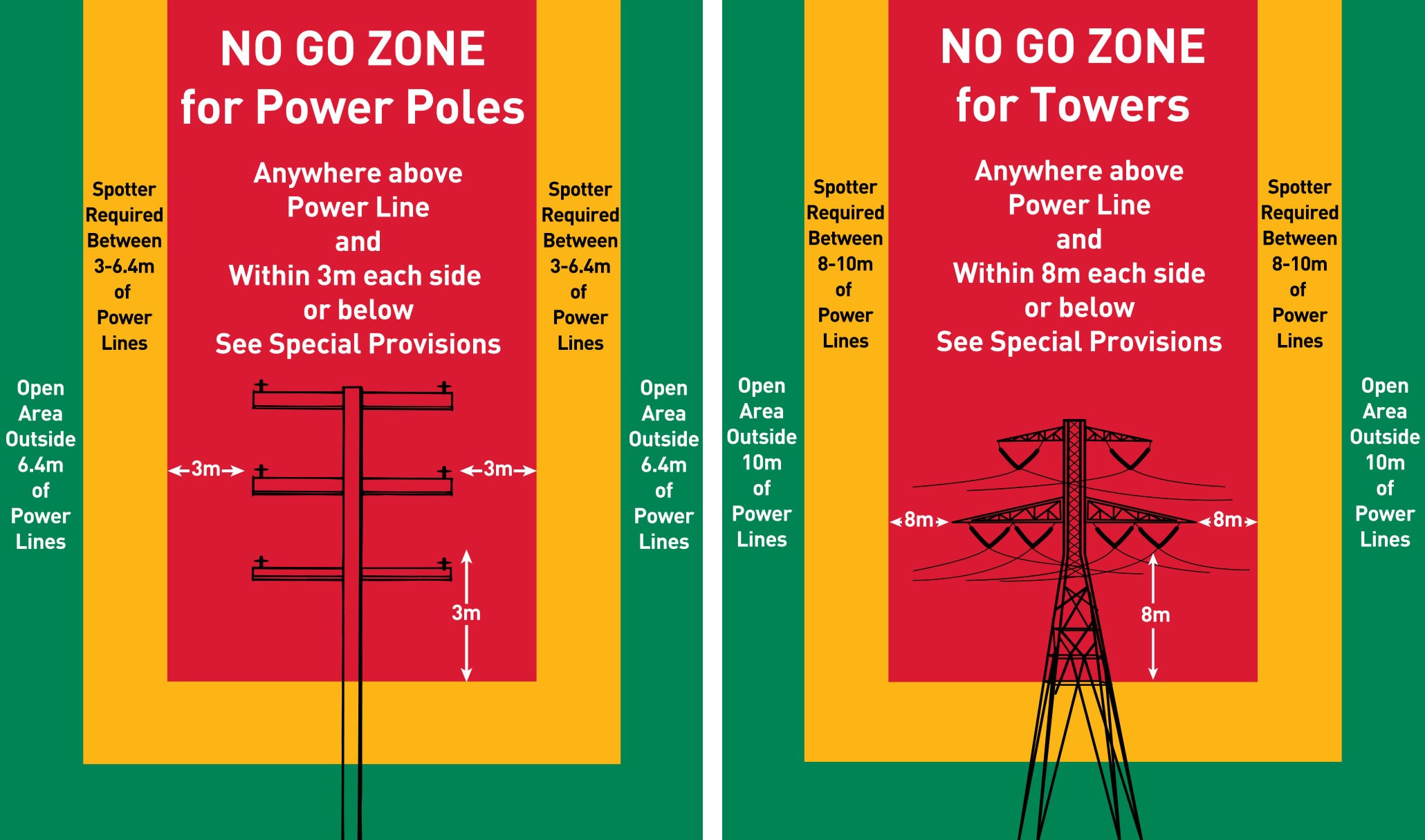
Know the No Go Zone
The first step is to know the No Go Zone framework(opens in a new window). Please refer below for the minimum clearance guidelines.
It is important to know what skills and training you require to perform certain tasks. This will vary depending on who you are working for, and the type of electric lines you are working near to.
There are three different requirements that vegetation workers may need to comply with depending upon who they are working for, or engaged by, and their qualifications and training. The three requirements depend on whether working for or contracted to:
- a private company or person
- a local council, or
- a Victorian Electricity Supply Industry (VESI) company.
Before you start work
In addition to the No Go Zone and training requirements, it is important to anticipate all risks and think outside the square.
If you are working in a tree near powerlines, and particularly if you are holding a long branch, you are in a potentially very dangerous situation.
- Energy Safe recommends that to remain safe, those working for a private company or person should always maintain the 3m No Go Zone clearance from powerlines when climbing trees.
Note: At a minimum, private contractors must comply with the requirements contained in Regulation 614, 616, 617 and 618 of Victoria’s Electricity Safety (General) Regulations 2019(opens in a new window). You should also consider any other duties and obligations you have to ensure the safety of workers and the safety of others, which includes meeting the requirements of the Victorian Occupational Health and Safety Act 2004(opens in a new window).
Before starting work:
- Always check that foliage is far enough away from powerlines for safe work to begin.
- Always maintain control of vegetation when cutting near powerlines, plan where the arc of a branch will fall or cut branch into small sections to maintain clearance from powerlines.
- Ensure that you and those you are working with are properly trained and qualified for the job you are doing.
- Only cut branches or sections of branches that are of a manageable size.
Only proceed if it is safe
If there is any concern regarding the safety of a tree clearing job, do not proceed. Discuss job safety with the local electricity distributor before starting work. You are required to notify them when working near their powerlines.
Always remember that you have the right to refuse work if the job is unsafe.
Do the job properly
All workers should constantly monitor the location of machinery and equipment that could come into contact with powerlines, including elevated work platforms, ladders, ropes, pole saws and power pruners.
Every worker should know the No Go Zone guidelines for working near powerlines, as well as:
- being suitably trained, qualified, authorised and experienced
- always completing a hazard analysis before starting work
- discussing identified hazards within the work group so everyone is aware
- never cutting corners and never starting a job unless it is safe to proceed
- repeatedly checking the location of powerlines while work is underway as their position can change significantly due to wind and temperature.
Warn other workers
Tradespeople, vegetation workers and arborists who are working near powerlines and electrical infrastructure need to be extremely careful that they, or their equipment, does not touch live wires.
Anyone entering the worksite needs to be aware of these risks. Actions should be taken to ensure that people who don’t understand these hazards, or are not appropriately trained and authorised, are kept well away.
Trees and branches can conduct electricity. Cutting a branch that falls onto a powerline can cause a fault to earth and electrocution. This can occur whether operating pole saws or chainsaws from the ground or in a tree.
Guidelines for minimum clearances for vegetation workers
These guidelines provide vegetation workers with guidance on the safe working distance from overhead electrical assets.
There are three different requirements that vegetation workers may need to comply with depending upon who they are working for, or engaged by, and their qualifications and training. The three requirements are explained further below.
Private work
Look up and live
Get to know Victoria’s No Go Zone guidelines – they provide a framework for working safely near electrical infrastructure.
Energy Safe recommends private tree contractors maintain the No Go Zone 3m exclusion zone.
However, at a minimum, private contractors must comply with the requirements contained in Victoria’s Electricity Safety (General) Regulations 2019, in particular Regulations 614, 616, 617 and 618. You should also consider any other duties and obligations you have to ensure the safety of workers and the safety of others, which includes meeting the requirements of the Victorian OHS Act.
The latest version of the No Go Zone rules can be found on the WorkSafe website(opens in a new window).
Council work
Vegetation management work in the vicinity of, or near live overhead powerlines performed on behalf of a local council, who have electric line clearance responsibilities defined by the Act, is to be undertaken in compliance with these documents:
- The Code of Practice on electrical safety for work on or near high voltage electrical apparatus (known as the Blue Book)
- Electrical safety rules for vegetation management work near overhead powerlines by non-electrical workers.
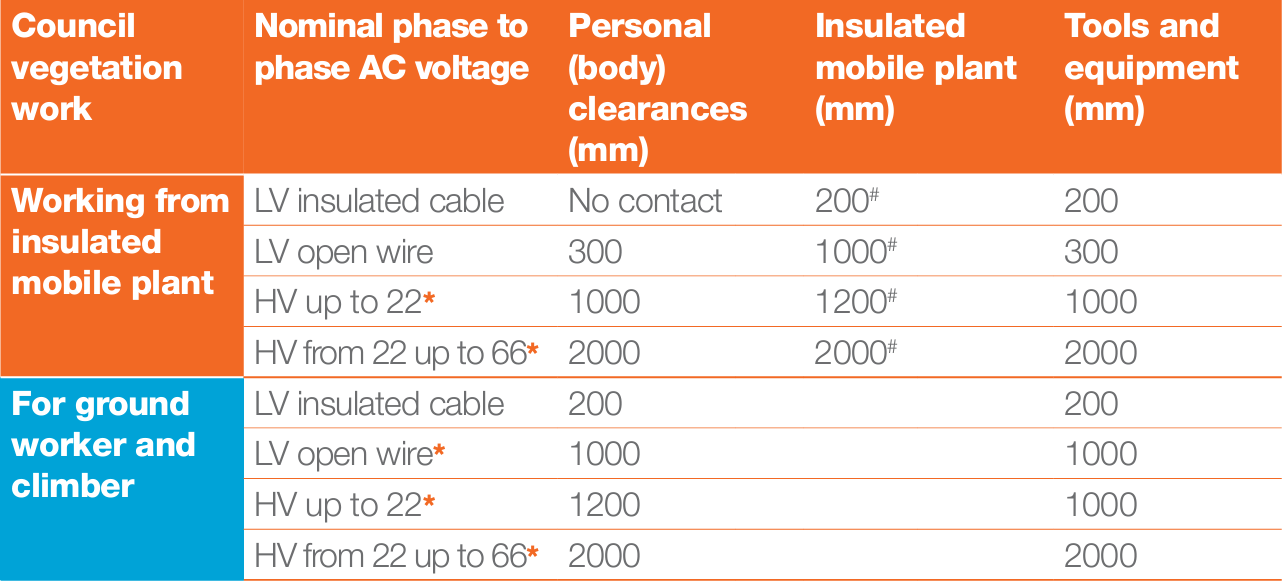
For relevant overhead electrical asset clearances see the safe approach distances diagram and table below.
- Information on the training requirements for those not working for, or under the control of an electricity asset owner, but who are working for other responsible person/s, is addressed in Electrical safety rules for vegetation management work near overhead powerlines by non-electrical workers.
Council work documents are available on this website.

Notes:
- Energy Safe recommends private tree contractors maintain the No Go Zone 3m exclusion zone. However, at a minimum, private contractors must comply with the requirements contained in Victoria’s Electricity Safety (General) Regulations 2019, in particular Regulations 614, 616, 617, 618. You should also consider any other duties and obligations you have to ensure the safety of workers and the safety of others, which includes meeting the requirements of the Victorian OHS Act.
- For VESI vegetation work approach distances refer to www.vesi.com.au(opens in a new window)
* Work over conductor exclusion zones not permitted.
# Energy Safe recommended minimum insulated mobile plant clearances.
Victorian electricity supply industry (VESI) work
Vegetation management work in the vicinity of or near live overhead powerlines by people working for a distribution business is to be undertaken in compliance with the VESI Vegetation Management Guideline. Further information on the training requirements for those working for, or under the control of an electricity asset owner is also addressed this document titled, which can be found at www.vesi.com.au(opens in a new window)
Questions
| AusNet Services 1300 360 795 | CitiPower 1300 301 101 | Jemena 1300 131 871 |
| Powercor 13 22 06 | Transport Victoria 1800 800 007 | United Energy 1300 131 689 |
Date: 13/09/2026 9:59
The currency and accuracy of this information cannot be guaranteed once printed or saved to a storage device. If in doubt, please check the Energy Safe Victoria website for the current version.
Reviewed